Psyche Quest
Role: Game Designer, 2D Artist, Co-Programmer, Co-Level Designer
Tools: Unity, C#, Procreate
Team: Kristen Marcinek, Sara Bayat Hashemi
Psyche Quest is a 2D platformer that takes players on a journey through the mind of someone with Borderline Personality Disorder (BPD).
You play as the imaginary friend of the protagonist who must navigate your friend's mind. Each level represents different effects borderline personality disorder has on the brain. Along the way, the player uncovers the protagonist's memories, emotions, and experiences, shedding light on the impacts BPD has on mental health.
Contents
Selected Assets


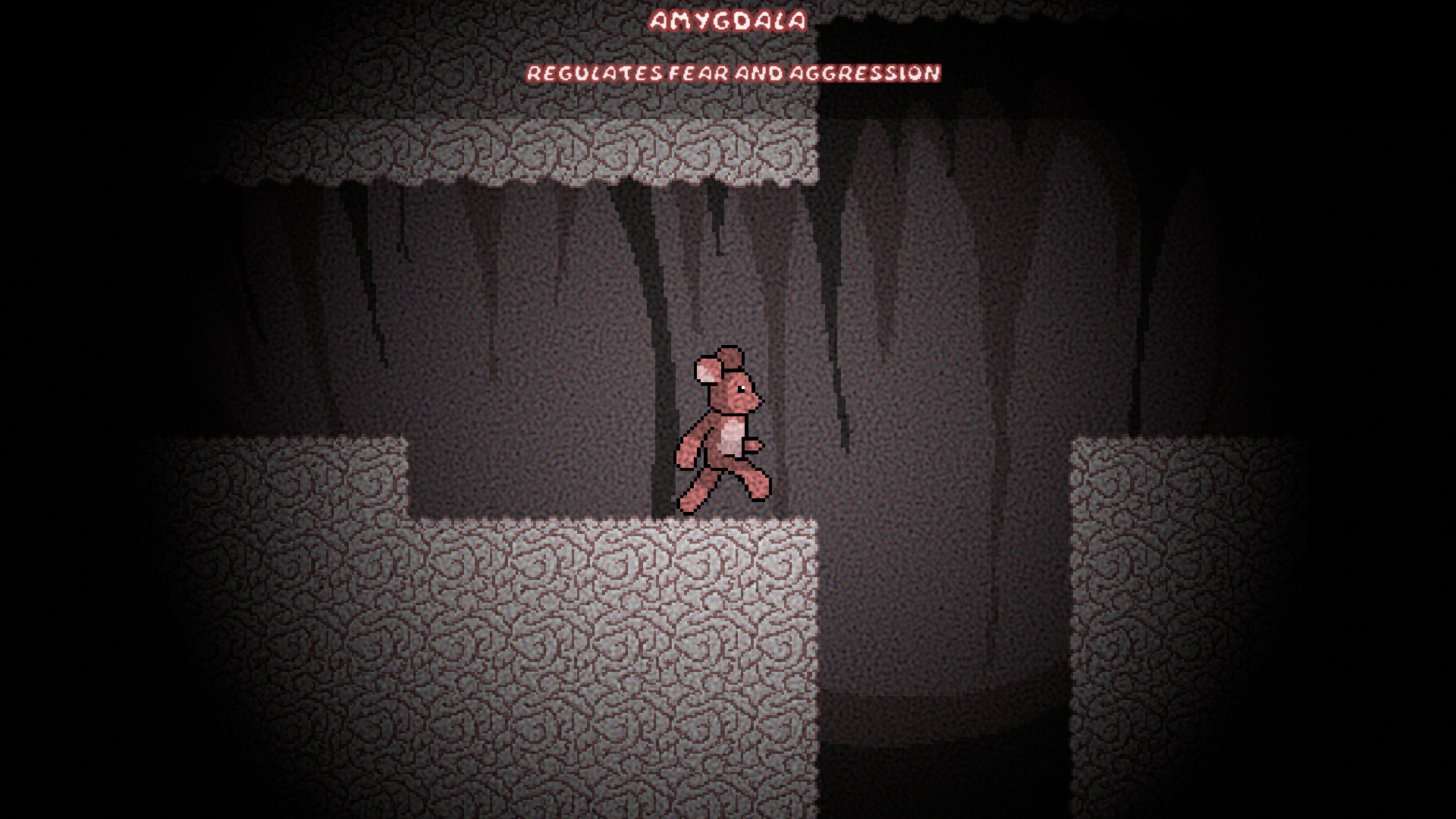
The run and swim cycles of the player character, a red and mouse-like imaginary friend.



Backgrounds for each level, visually representing how each area of the brain is affected by BPD while maintaining a brain matter-esque color scheme.
Level Design
- Amygdala: The amygdala regulates fear and aggression. For people with BPD, their amygdalae are noticeably smaller than average and thus feel fear and anger more intensely. This level is horror-inspired.
- Hippocampus: Being the body's data processor, the hippocampus deals with memory formation, spatial orientation, and emotional reactions. For people with BPD, their hippocampi are commonly in a state of hyperarousal. This manifests in people with BPD perceiving friends and family as more threatening and social interactions as more negative. With dizzying gameplay and fake platforms in this level, not everything is as it seems.
- Prefrontal Cortex: Responsible for reason, rationality, and decision-making, prefrontal cortexes for people with BPD are often inactive and inefficient, causing impulsive actions. To simulate this, this level tests the players patience with high speed character movement mixed with slow speed environments. Passing through portals in the game mirrors life's spontaneous decisions. Rushing through them can lead to unforeseen challenges, emphasizing how impulsivity can result in regrettable outcomes.
- HPA Axis: The HPA axis is the neural pathway within the brain that deals with reactions to stress and maintaining cortisol levels. People with BPD are often found with high levels of cortisol in their bloodstreams. Players must swim through the stress before time runs out.
Further Exploration
While I am happy with the minimum viable product presented here, there are changes and additions that can be further explored in the future. Namely, ensuring that the approach is not stigmatizing in and of itself and is both empathetic towards and grounded in the reality of those with BPD and those who love someone with BPD. Likewise, the narrative and puzzles are to be teased out further.